How GSM Controllers Operate in Areas with Poor Mobile Signal
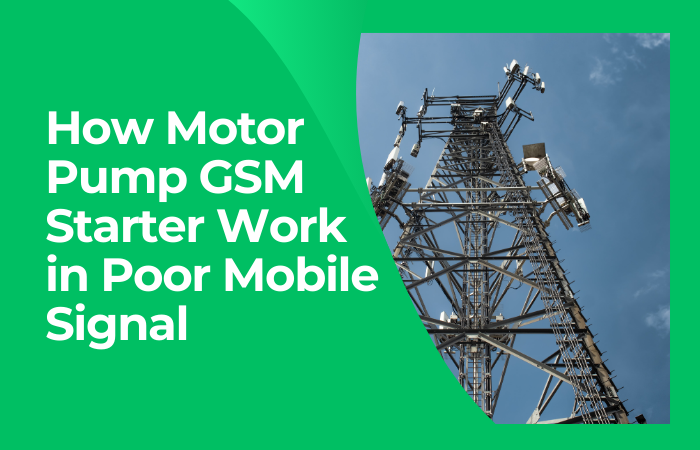
Rural farms often sit at the edge of mobile coverage, where poor signals can make GSM-based pump controllers act unresponsive or unreliable. But with the right setup and equipment, farmers can still benefit from remote pump control- even in low-signal areas.
In this post, we’ll explain how GSM controllers work under weak signal conditions, what affects performance, and how to optimize for reliable pump operation.
1. GSM Technology: Designed for Wide Coverage
GSM (Global System for Mobile Communications) uses a cellular network of macro, micro, pico, and femtocells, designed to provide signal coverage across vast distances-even decades-old 2G networks remain operational in remote areas.
These network cells, especially the large macro towers, give GSM unique reach-often more dependable in rural zones than newer technologies like 4G or fiber optics.
2. Common Signal Challenges on the Farm
Several factors cause poor GSM reception:
- Distance from tower: Cell towers might be kilometers away, especially in remote areas, weakening the signal.
- Geography & Terrain: Hills, dense foliage, and valleys disrupt signal propagation.
- Cell boundaries: GSM coverage is broken into cells; controllers near the edge often switch cells, causing momentary drops.
- Low tower density: Operators may not build towers in sparsely populated regions due to cost constraints.
These factors can result in intermittent SMS reception or delayed missed-call triggers on GSM starters.
3. How GSM Controllers Manage Variable Signals
GSM modules in starters adapt in several ways:
- Automatic Power Adjustment: The module increases or decreases transmission strength based on signal quality-a built-in “AGC” (Automatic Gain Control) loop helps maintain connectivity
- Retry Mechanisms: Most GSM starters attempt command reception multiple times-if a missed call or SMS fails initially, it retries a few seconds later.
- Fallback Reliability: SMS often works at lower signal levels than voice calls, giving more resilience in silent command mode
4. Farmer’s Strategies to Boost GSM Reception
Here are proven techniques used on Indian farms:
- External High-Gain Antennas: Mount these atop poles or pump houses and aim them toward the nearest tower. They offer 10–20 dB gain and greatly improve reception.
- Use Directional Yagi Antennas: These narrow-beam antennas target signal sources-ideal when you know tower direction and distance.
- Avoid Signal Blockers: Metal housings, thick concrete walls, and dense foliage reduce reception. Install the GSM controller in a shield-free spot.
- Keep Unit Electrically Stable: Use proper earthing and avoid noisy power environments that cause interference.
- Add Signal Amplifiers/Reinforcers: In extreme cases, repeaters or in-wall boosters can help-but choose models legal and compatible with Indian telecom rules.
5. Real-World Example
At a remote waterworks site in Denmark, GSM controllers were used in a location without broadband access. By installing a fallback SMS-based system and high-gain antenna, operators could reliably open valves and receive water level alerts-even when mobile data coverage dipped.
Indian farmers report similar gains; one user in a low-network zone said installing a rooftop antenna “made his GSM starter as dependable as having it next to his house.”
6. When to Consider Alternatives
If the mobile signal remains too weak even after boosting:
- Hybrid Starters with App & SMS: Some GSM starters support cloud apps-using SMS as backup ensures reliability.
- LoRa or Satellite Backup: For extremely remote farms, LoRa mesh or low-cost satellite systems may offer a reliable fallback, though costs are higher.
Read Next Guides
Get Prices from Verified Mobile Starters Sellers Near You
We connect you with trusted and verified sellers near you. Get the best deals, fast and hassle-free!
Popular Products from Verified Sellers
Read Other Posts on Mobile Starters

The Complete Guide to Mobile Starters & GSM Controllers for Farmers

How to Install a Mobile Starter for Your Water Pump – Step-by-Step Guide
How Dry-Run Protection Works in GSM Starters and Why It Saves Motors
Understanding Three-Phase vs Single-Phase Mobile Starters for Agriculture
Solar-Compatible GSM Starters: Setup & Best Practices for Off-Grid Irrigation
Best GSM Mobile Starters for Farmers in 2025 – Features, Pricing & Reviews
Top GSM Starters Under ₹5000 – Budget Picks That Last
Where to Buy GSM Mobile Starters for Your Water Pump in India
Troubleshooting GSM Mobile Starters: Step-by-Step Guide to Fix Common Problems
Maintenance Guide for GSM Mobile Starters: Keep Your Pump Control System Running Smoothly
GSM vs IoT Mobile Starters: Which Remote Motor Control Technology is Right for You?
Mobile Starters for Agriculture Pumps and Motors: A Complete Guide for Farmers
How GSM Starters Improve Motor Efficiency and Power Savings
Remote Monitoring: What Data GSM Controllers Can Provide to Farmers

The Future of GSM Starters: 4G, 5G, WiFi, and IoT Integration
Importance of GSM Starters in Dairy Farming & Livestock Watering Systems
Benefits of GSM Starters- Is a GSM Starter Worth It for Small Farmers?

Key Features Every Farmer Should Look for in a Mobile Starter
GSM vs Wi-Fi Motor Starters: Which One Should Farmers Choose?
How GSM and IoT Together Are Changing Indian Agriculture
Best SIM Cards & Mobile Networks for GSM Pump Controllers in Rural Area
Remote Pump Automation Without GSM – What Are the Alternatives?