The Complete Guide to Mobile Starters & GSM Controllers for Farmers
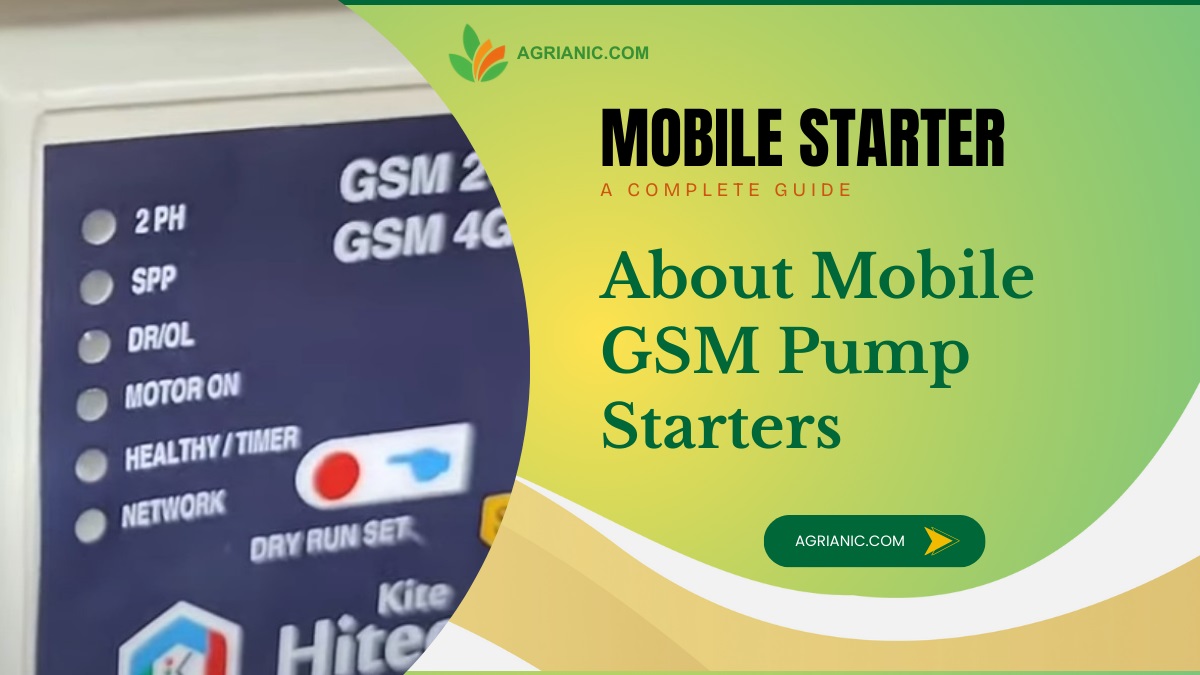
A mobile starter is a device that allows farmers to control their irrigation pumps remotely using their mobile phone. Traditionally, farmers had to walk or travel to their fields to manually switch pumps on and off, often multiple times a day. This was time-consuming, physically tiring, and sometimes unsafe during bad weather.
With the arrival of GSM-controlled mobile starters, the process is as easy as giving a missed call or sending an SMS. Farmers can start or stop their pumps from anywhere, ensuring water is used only when needed. This saves electricity, water, and travel costs.
As agriculture becomes more modernized, mobile starters are emerging as an important tool for smart irrigation. By combining telecommunication technology with electrical pump control, they help farmers manage resources more efficiently, reduce wastage, and increase productivity.
What is a Mobile Starter?
A mobile starter is an electronic device connected to an electric motor or water pump that allows it to be controlled remotely via a GSM mobile network.
Working Principle: It uses a GSM module with a SIM card to receive commands from a mobile phone. Once the signal is received, the control unit activates or deactivates the pump’s electrical circuit.
Main Components:
- Control Unit – The brain of the system that processes GSM signals.
- GSM SIM Slot – Holds the SIM card for communication.
- Relay & Wiring – Connects to the pump motor and controls power flow.
The device is wired between the electrical supply and the pump starter. It can be installed for borewell pumps, open well pumps, and drip irrigation systems. Once connected, the farmer can operate pumps without physically visiting the farm.
Types of Mobile Starters
Mobile starters are available in different configurations to suit various farming needs:
- Single-Phase Models – Designed for pumps operating on standard single-phase electricity (commonly used in small farms and domestic wells).
- Three-Phase Models – Suitable for large agricultural pumps (5 HP and above) used in commercial farming.
- Solar-Compatible Starters – Specially designed to work with solar-powered water pumps, ideal for remote areas with no grid electricity.
- Hybrid Models – Can run on both electricity and solar power, providing flexibility during power cuts.
Choosing the right type depends on the power supply available, pump capacity, and whether the farmer wants to integrate renewable energy solutions.
How GSM Controllers Work
A GSM controller is the brain behind a mobile starter. It uses the Global System for Mobile Communications (GSM) network to receive and process commands from the farmer’s mobile phone. The most common control methods include:
- Missed Calls – Farmers give a call to the device number; it automatically disconnects and triggers the motor to start or stop. This method is cost-free and works even with basic feature phones.
- SMS Commands – A specific text message is sent to the device to perform an action, often with extra options like checking motor status or scheduling start/stop times.
- Mobile Apps – Some advanced models have companion apps that display real-time motor status, energy usage, and fault alerts.
Most GSM controllers also include safety features such as:
- Dry-run protection – Automatically shuts off the pump if no water is detected to prevent damage.
- Overload cut-off – Stops the motor in case of high voltage or excessive current draw.
- Phase failure alerts – For three-phase systems, warns if a phase is missing.
The GSM unit works independently of the internet; it only needs a working SIM card and basic mobile network coverage. This makes it highly reliable in rural areas where internet connectivity is poor but mobile signals are available.
Benefits for Farmers
The adoption of mobile starters brings several game-changing advantages for farmers:
- Remote Control – Farmers no longer need to travel to the field to operate pumps. This saves time and reduces the effort required, especially during odd hours or bad weather.
- Fuel Savings – By avoiding multiple trips to the farm, fuel expenses for motorcycles or tractors are greatly reduced.
- Water Conservation – Pumps can be turned off immediately after irrigation, preventing overwatering and saving water resources.
- Safety – Farmers avoid exposure to electric shock risks, particularly during rainy seasons or in areas with poor wiring.
- Multi-Pump Management – With GSM control, a single phone can operate pumps in multiple locations, increasing operational efficiency.
In addition, features like overload protection and dry-run prevention help protect expensive pump motors from damage, reducing repair costs. Overall, mobile starters provide a return on investment within one or two seasons through savings in fuel, time, and reduced motor maintenance.
Mobile Starter vs Traditional Starter
Here’s a quick comparison to understand why farmers are switching to mobile starters:
| Feature | Mobile Starter | Traditional Starter |
|---|---|---|
| Remote Operation | ✅ | ❌ |
| Overload Protection | ✅ | ⚠️ Manual reset |
| Water Saving | ✅ | ❌ |
| Initial Cost | Medium | Low |
While traditional starters are cheaper initially, they lack remote control, automation, and advanced safety features. This means farmers must physically go to the pump location every time they want to operate it. Mobile starters, on the other hand, offer convenience, safety, and efficiency.
Leading Brands & Manufacturers of Mobile Starters & GSM Controllers
The Indian market for GSM-enabled mobile starters has grown rapidly, driven by rising demand for efficient and remote-controlled irrigation systems. Both homegrown innovators and established electrical engineering giants are competing to deliver reliable, farmer-friendly solutions. Below are some of the most notable brands making an impact in this space:
Top Brands in India
- Genius:
Renowned for rugged, weather-resistant units with powerful GSM modules, ensuring strong reception even in remote,
low-signal regions. Popular among farmers who face connectivity challenges. - Indusmate:
Specializes in farmer-friendly designs that use simplified SMS command systems, making them easy to operate without smartphones or internet access. - Raivens:
Focused on affordable mobile starter solutions for small and medium-sized farms, offering reliable basic features without inflating the cost. - L&T:
A trusted industrial name that has adapted its premium-quality control systems for agriculture, ensuring durability, precision, and top-tier build quality. - Mobitech:
Known for advanced app-controlled systems that allow scheduling, remote monitoring, and real-time alerts for smarter water management. - LiveskyTech:
Offers versatile hybrid models compatible with both solar pumps and conventional motors, perfect for farms using mixed power sources. - Msetu:
An emerging brand offering budget-friendly GSM starters with good build quality, known for being user-friendly mobile interfaces and having dependable rural network performance.
What to Consider Before Choosing a Brand
- After-sales service: Ensure the brand has local service centers or certified technicians.
- Warranty period: Look for at least 12 months of coverage, ideally with on-site service options.
- Spare parts availability: Choose brands that keep critical components in stock for quick replacements.
- Ruggedness: The unit should withstand dust, heat, and humidity common in farm environments.
Since these devices operate in challenging field conditions, service support is as crucial as the features themselves. Adding direct links to each brand’s product page not only helps farmers make informed decisions but also creates a quick channel for enquiries and purchases.
Price Range & Buying Tips for Mobile Starters & GSM Controllers
In the Indian market, GSM-enabled mobile starters are available across a range of prices depending on the brand reputation, technical features, and motor compatibility. While budget-friendly starter models cover basic needs, advanced versions offer enhanced safety, monitoring, and energy efficiency.
Typical Price Ranges
- Basic single-phase GSM starters: ₹3,000–₹4,500
Ideal for small farms and motors under 3 HP. These typically include basic call/SMS control but may lack advanced protections. - Three-phase starters with dry-run protection: ₹4,500–₹6,000
Designed for higher-capacity motors, these models usually come with overload and phase-failure protection for better safety. - Hybrid/solar-compatible models: ₹6,000–₹8,000
Support both grid and solar power sources, with added smart monitoring features for off-grid irrigation setups.
Smart Buying Tips
- Buy direct from the manufacturer: Often 5–15% cheaper, but confirm that warranty claims are easy to process and spare parts are available.
- Purchase from authorized retailers: Slightly higher prices, but they usually offer smoother warranty processing and local service support.
- Check warranty & service availability: Look for at least a 1-year warranty and ensure that service centers or trained technicians are accessible in your region.
- Verify network compatibility: Ensure the SIM slot works with major local GSM providers and has stable coverage at your farm location.
Investing in a reliable GSM mobile starter should balance price, features, and after-sales support.
Choosing the cheapest option without considering build quality or service backup can lead to costly downtime during peak irrigation periods.
How to Install a Mobile Starter
While the basic principle is simple, mobile starter installation should be done by a certified electrician for safety.
Installation steps:
- Mount the control unit in a dry, safe location near the pump.
- Connect wiring from the control unit to the motor starter or pump panel.
- Insert the GSM SIM card into the slot provided and ensure it has an active plan.
- Configure control commands (missed call/SMS/app).
- Test the start/stop function from the phone.
Safety precautions:
- Always turn off the main power supply before wiring.
- Avoid installing in wet or open areas.
- Use proper earthing to prevent electrical shocks.
Common Problems & Troubleshooting for Mobile Starters & GSM Controllers
Like any piece of electronic farm equipment, GSM-based mobile starters can experience occasional hiccups. Understanding the most common issues and how to address them can help you quickly restore operation and avoid unnecessary downtime during critical irrigation periods.
Frequent Issues & Solutions
- Motor not starting:
This could be due to loose wiring, inadequate power supply, or an incorrect mode setting.
First, confirm that the device is receiving power from the mains and that circuit breakers or fuses are intact.
Then, check that all wiring connections are tight and free from corrosion. Finally, ensure the starter is set to Auto mode so that GSM commands are accepted. - Weak GSM signal:
A poor network connection can prevent commands from being received.
Try relocating the unit to a higher point or closer to the nearest cell tower.
If relocation isn’t possible, connect an external GSM antenna to improve reception and reduce missed commands. - SIM card issues:
If the unit is unresponsive, check whether the SIM’s balance or validity has expired.
Make sure SMS and call services are active, and verify that the SIM is properly seated in its slot.
In regions with multiple networks, switching to a provider with better rural coverage can also help. - Overheating:
Persistent heat build-up may point to overloading, a motor running beyond its rated capacity, or faulty wiring.
Shut down the system immediately to prevent damage. Allow it to cool before inspecting for signs of wear, burnt insulation, or loose terminals.
Always engage a qualified technician to fix overheating problems, as they may be linked to deeper electrical faults.
Here is a full list of common issues and problems, and how to solve them.
Preventive Maintenance Tips
- Perform monthly checks on wiring and terminals for corrosion or looseness.
- Keep the GSM controller in a shaded, well-ventilated enclosure to avoid heat buildup.
- Test the starter’s response at least once a week to ensure GSM communication is stable.
- Maintain an active service plan with the manufacturer or dealer for quick repairs.
By addressing small faults early and following preventive measures, farmers can ensure that their mobile starters remain reliable season after season, delivering uninterrupted irrigation control when it’s needed most.
State-Wise Market Demand
Adoption rates vary across India:
- High demand – Maharashtra, Gujarat, Rajasthan (due to large-scale farming and water scarcity issues).
- Moderate demand – Karnataka, Tamil Nadu, Andhra Pradesh.
- Growing demand – Punjab, Haryana, Uttar Pradesh (driven by mechanization and farmer awareness).
Key adoption factors include network coverage, electricity reliability, and crop type. States with high irrigation dependency are more likely to adopt mobile starters quickly.
Why Mobile Starters & GSM Controllers Are Essential for Modern Farming
Mobile starters and GSM controllers have moved beyond novelty status to become practical essentials for modern irrigation management. By enabling remote control of pumps and motors, these devices remove the need for frequent field visits, cut operating costs, and reduce the risk of accidents during adverse weather. For farmers operating multiple sites or managing wells far from the home, the ability to start, stop, and monitor pumps from a phone translates directly into saved time, lower fuel consumption, and fewer equipment failures, all of which improve farm productivity and profitability.
Beyond convenience, mobile starters add an important layer of protection for costly motor equipment. Built-in safety features like dry-run protection, overload cut-off, and phase-failure alerts prevent damage that would otherwise lead to expensive repairs or downtime. When combined with solar- or hybrid-compatible models, GSM controllers also support resilient, off-grid irrigation strategies that are increasingly valuable in regions with unstable grid power.
Quick Checklist Before You Upgrade
- Verify motor compatibility: single-phase, three-phase, or solar; match the starter to your pump’s requirements.
- Check network coverage: confirm a reliable GSM signal at the pump site; consider an external antenna if needed.
- Choose a trusted supplier: prioritise brands with local service centres, spare parts, and warranty support.
- Plan for installation: hire a certified electrician for secure wiring, earthing, and compliance with safety norms.
- Enable monitoring: prefer models with alerts or app support so you can detect faults early.
If you decide to move forward, start by comparing two or three reputable models, request demonstration videos or field references, and ask about after-sales response time. A carefully chosen mobile starter pays back quickly through reduced travel, lower repair costs, and more efficient water use, making it a smart investment for both smallholders and large farms alike.
Get Prices from Verified Mobile Starters Sellers Near You
We connect you with trusted and verified sellers near you. Get the best deals, fast and hassle-free!
Popular Products from Verified Sellers
Read Other Posts on Mobile Starters
How to Install a Mobile Starter for Your Water Pump – Step-by-Step Guide
How Dry-Run Protection Works in GSM Starters and Why It Saves Motors
Understanding Three-Phase vs Single-Phase Mobile Starters for Agriculture
Solar-Compatible GSM Starters: Setup & Best Practices for Off-Grid Irrigation
Best GSM Mobile Starters for Farmers in 2025 – Features, Pricing & Reviews
Top GSM Starters Under ₹5000 – Budget Picks That Last
Where to Buy GSM Mobile Starters for Your Water Pump in India
Troubleshooting GSM Mobile Starters: Step-by-Step Guide to Fix Common Problems
Maintenance Guide for GSM Mobile Starters: Keep Your Pump Control System Running Smoothly
GSM vs IoT Mobile Starters: Which Remote Motor Control Technology is Right for You?
Mobile Starters for Agriculture Pumps and Motors: A Complete Guide for Farmers
How GSM Starters Improve Motor Efficiency and Power Savings
Remote Monitoring: What Data GSM Controllers Can Provide to Farmers
The Future of GSM Starters: 4G, 5G, WiFi, and IoT Integration
Importance of GSM Starters in Dairy Farming & Livestock Watering Systems
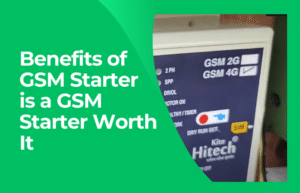
Benefits of GSM Starters- Is a GSM Starter Worth It for Small Farmers?
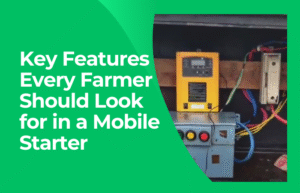
Key Features Every Farmer Should Look for in a Mobile Starter
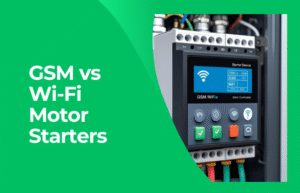
GSM vs Wi-Fi Motor Starters: Which One Should Farmers Choose?
How GSM and IoT Together Are Changing Indian Agriculture
Best SIM Cards & Mobile Networks for GSM Pump Controllers in Rural Area
Remote Pump Automation Without GSM – What Are the Alternatives?
The Role of GSM Controllers in Smart Farming