A Complete Guide to Kiwi Varieties in India
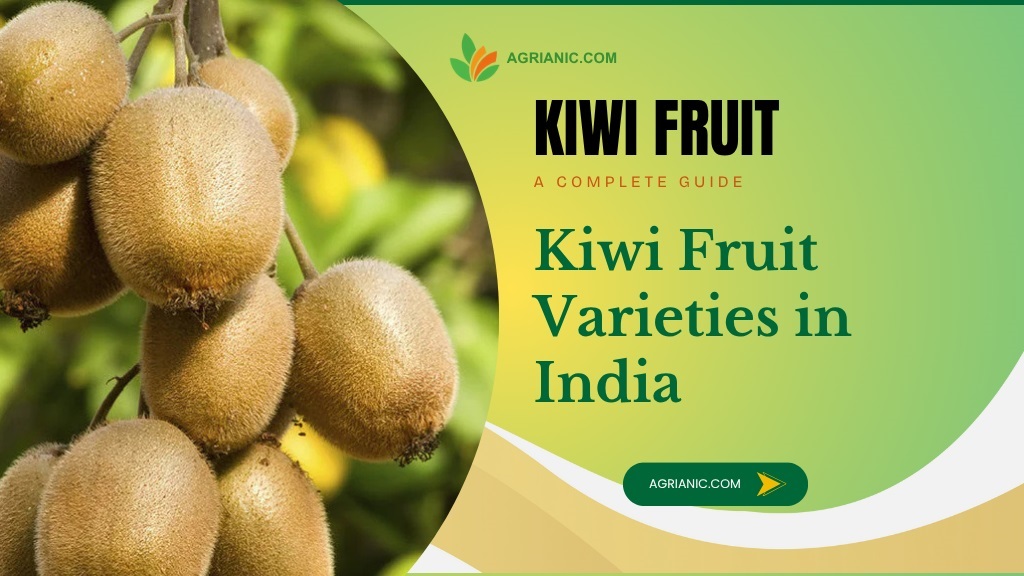
Kiwi fruit (Actinidia deliciosa) has rapidly gained popularity as a high-value horticultural crop in India, particularly in the temperate regions of Himachal Pradesh, Uttarakhand, Arunachal Pradesh, and certain parts of Sikkim. With growing awareness of its rich nutritional profile, high in vitamin C, dietary fiber, and antioxidants, kiwi has transitioned from a niche fruit to a commercially viable crop with excellent market potential, both domestically and internationally.
For Indian farmers, cultivating kiwi is not just about growing a fruit; it is an opportunity to enter a lucrative segment of the fresh fruit market. However, successful kiwi farming requires careful planning, particularly in selecting the right variety. The choice of variety influences fruit size, flavor, yield, market demand, and adaptability to local climate conditions. Planting an unsuitable variety can lead to poor fruit quality, low production, and economic losses.
In India, the key kiwi varieties cultivated for commercial purposes include Hayward, Abbott, Allison, Bruno, Monty, and Tomuri. Each variety has unique characteristics, climatic requirements, and market appeal. While Hayward dominates both domestic and international trade, other varieties like Monty (gold) or Allison offer niche advantages, such as early harvesting or premium pricing. Tomuri, on the other hand, plays a vital role as a male pollinator, ensuring optimal fruit set in female vines.
This guide provides a comprehensive overview of these kiwi cultivars, detailing their fruit characteristics, climate suitability, yield potential, and market opportunities. Whether you are a small-scale grower exploring kiwi for the first time or an established farmer aiming to optimize your orchard, this resource will help you make informed decisions for profitable and sustainable kiwi cultivation in India.
1. Hayward
Description: Hayward is the most popular and widely grown kiwi variety in the world, and for good reason. It produces large, oval-shaped fruits with smooth brown skin and a strikingly bright green flesh. The texture is tender and juicy, while the flavor balances tanginess with natural sweetness, making it a consumer favorite. The fruits also have a longer shelf life compared to other kiwi varieties, which is a key advantage for transportation and storage.
Climate Suitability: This variety is well-adapted to temperate climates and is ideally suited for cultivation in Indian regions that experience moderate winters with light frost. It performs best at elevations between 800 and 1,500 meters above sea level, such as parts of Himachal Pradesh, Uttarakhand, Arunachal Pradesh, and Sikkim. Adequate chilling hours are necessary for uniform bud break and flowering, which directly influences fruit quality and yield.
Yield: Hayward is a high-yielding variety, making it very attractive for commercial growers. A well-maintained mature vine can produce between 10–15 tonnes per hectare under proper management practices. Good pruning, timely irrigation, and nutrient management significantly improve both yield and fruit quality.
Market: Hayward dominates the global kiwifruit trade, accounting for nearly 90–95% of international supply. In India, demand for Hayward kiwis has been steadily rising due to growing consumer awareness of their health benefits and versatile use in juices, salads, desserts, and direct consumption. The variety’s attractive appearance and excellent transportability make it equally appealing for domestic retail markets and lucrative for export opportunities.
Why Grow Hayward?
For Indian farmers, Hayward offers a dependable combination of high productivity, strong market demand, and better post-harvest shelf life. With proper orchard management, this variety can generate significant returns, making it one of the best choices for commercial kiwi cultivation in India.
2. Allison
Description: Allison is an early-fruiting kiwi variety known for its medium-sized, oval-shaped fruits with sweet and mildly tangy green flesh. Compared to Hayward, Allison fruits are slightly smaller but ripen earlier, which helps farmers capture the market ahead of the main season. The flavor is refreshing, making it popular for fresh consumption.
Climate Suitability: It performs well in areas with cool temperate conditions and moderate frost. Ideal for hilly regions of Himachal Pradesh and Uttarakhand, Allison requires slightly fewer chilling hours than Hayward, making it suitable for a broader range of microclimates.
Yield: Allison vines are vigorous and can produce 8–12 tonnes per hectare under proper care. While the yield is a bit lower than Hayward’s, the early maturity often balances this by fetching better prices in the market.
Market: Due to its early harvesting window, Allison has a strong domestic demand. It allows farmers to supply fruits when the market is less saturated, leading to higher returns. Although it is not as dominant in exports as Hayward, it remains a valuable commercial variety for local markets.
Why Grow Allison?
A great choice for growers looking to extend the kiwi season, capture early market opportunities, and diversify production alongside Hayward.
3. Bruno
Description: Bruno produces medium to large fruits with an elongated shape and brown, slightly hairy skin. The flesh is green, rich in vitamin C, and has a distinct tangy flavor, making it excellent for both fresh eating and processing into juices and jams.
Climate Suitability: It is more tolerant of varied climatic conditions compared to Hayward and can thrive in slightly warmer regions. This adaptability makes it a useful variety in areas where chilling hours are less consistent.
Yield: Bruno is a very high-yielding variety, with mature vines capable of producing up to 15–20 tonnes per hectare under good management.
Market: While not as attractive in appearance as Hayward, Bruno finds good demand in processing industries due to its strong flavor and high vitamin C content. Its fresh market share is moderate but growing in niche segments.
Why Grow Bruno?
Ideal for growers aiming at bulk production and processing industries, while still serving fresh markets at a competitive price.
4. Monty
Description: Monty produces small to medium-sized fruits with green flesh and a more acidic taste compared to other varieties. Though not as sweet as Hayward or Allison, it has a unique flavor that appeals to certain consumer groups.
Climate Suitability:
Monty is hardy and adaptable, performing well in colder areas with higher elevations. It requires consistent winter chilling for proper fruiting.
Yield: The yield is moderate, ranging between 8–10 tonnes per hectare, depending on orchard management.
Market: Monty has limited demand in fresh markets due to its higher acidity, but is valued for processing into juices, purees, and jams.
Why Grow Monty?
Best suited for growers supplying the processing sector or looking to diversify orchard production with a hardy, dependable variety.
5. Abbott
Description: Abbott produces medium-sized fruits with a smooth texture and balanced sweet-tart flavor. It is an attractive fruit with vibrant green flesh, similar in appearance to Hayward, but slightly smaller in size.
Climate Suitability: It grows well in temperate climates with mild frost. Suitable for areas like Arunachal Pradesh and Sikkim, Abbott requires moderate chilling hours to ensure consistent yields.
Yield: Moderate to high yielding, with production potential of around 10–12 tonnes per hectare under well-managed orchards.
Market: Abbott has good acceptance in local markets, especially where consumers prefer medium-sized, easy-to-eat fruits. While not a major export variety, it contributes to domestic supply chains.
Why Grow Abbott?
A reliable choice for growers seeking a balance between yield, fruit quality, and consumer acceptance in regional markets.
6. Tomuri (Male Pollinator)
Description: Unlike Hayward, Allison, or Bruno, Tomuri does not produce edible fruits. Instead, it is a male kiwi vine grown primarily as a pollinator variety. Its role is to provide abundant pollen for female varieties, especially Hayward, which relies on cross-pollination for good fruit set and size. Tomuri vines produce small, inedible fruits but are essential for ensuring high productivity in commercial kiwi orchards.
Climate Suitability: Tomuri thrives under the same climatic conditions as Hayward, which makes it a perfect companion variety. It is best suited to temperate regions at elevations of 800–1,500 meters with moderate frost.
Yield: As a male vine, Tomuri does not yield marketable fruits. Its “yield” is measured in terms of pollen production and pollination efficiency. One well-grown Tomuri plant can pollinate several female vines.
Market: Tomuri has no direct market value since it does not produce commercial fruits. However, its indirect value is extremely high, as successful kiwi cultivation depends on proper pollination. Without Tomuri (or another male pollinator), female varieties like Hayward will produce very poor yields.
Why Grow Tomuri?
Every commercial kiwi orchard needs Tomuri vines to achieve profitable fruit production. Typically, farmers plant one Tomuri vine for every 5–7 Hayward vines. This ensures effective pollination, resulting in large, well-formed, and market-ready fruits.
Comparison of Kiwi Varieties in India
| Variety | Fruit Description | Climate Suitability | Yield (tonnes/ha) | Market Preference | Special Notes |
|---|---|---|---|---|---|
| Hayward | Large, oval fruits; bright green flesh; tangy-sweet flavor; long shelf life | 800–1,500 m, moderate frost; temperate climate | 10–15 | Dominates global trade (90–95%); strong domestic & export demand | Most popular commercial variety worldwide |
| Allison | Medium-sized fruits; sweet with mild tang; early ripening | Need Cool temperate regions, require slightly fewer chilling hours | 8–12 | Strong local demand due to early availability | Good for extending the kiwi season |
| Bruno | Medium–large, elongated fruits; tangy taste; rich in Vitamin C | Adaptable; performs even in slightly warmer areas | 15–20 | Popular for processing; moderate fresh market share | High-yielding; best for juice & jam industries |
| Monty | Small–medium fruits; acidic flavor; green flesh | Hardy thrives in colder, higher elevation regions | 8–10 | Limited fresh market; valued for processing | Dependable for juice & puree production |
| Abbott | Medium-sized fruits; smooth texture; balanced sweet-tart taste | Temperate climates with mild frost; moderate chilling required | 10–12 | Good acceptance in regional/domestic markets | Reliable for local supply chains |
| Tomuri (Male) | No edible fruits; produces pollen | Same as Hayward; suited to temperate climates at 800–1,500 m | – | Not sold commercially | Essential pollinator; 1 Tomuri per 5–7 Hayward vines |
Choosing the Right Variety for Your Orchard
Choosing the right kiwi variety is a crucial step in ensuring a productive and profitable orchard. Different varieties have unique requirements and market potential, so it’s important to consider climate, yield, pollination needs, and market preferences before planting.
- Climate: The local climate is one of the most important factors when selecting a kiwi variety. Green-fleshed varieties like Hayward and Allison thrive in regions with moderate frost and temperate conditions, typically at elevations of 800–1,500 meters. On the other hand, gold-fleshed varieties such as Monty or Gold Kiwi prefer warmer conditions and may require protection from heavy frost. Understanding your local weather patterns and microclimate can help prevent frost damage and ensure optimal fruit development.
- Market Demand: Market preference plays a key role in choosing a variety. Green kiwis like Hayward dominate both domestic and international markets and have a steady demand. Gold kiwis, while less common, sell at a premium due to their sweeter flavor and attractive appearance. However, they are more delicate and require careful handling, storage, and transport to maintain quality. Farmers should assess both local and export market potential before deciding on a variety.
- Pollination: Kiwi is a dioecious plant, meaning male and female flowers grow on separate plants. Successful fruit production depends on effective pollination. A common practice is to plant one male vine (e.g., Tomuri) for every 8–10 female vines. Proper male-to-female ratios ensure full fruit set, larger fruits, and higher yields. Inadequate pollination can lead to small, misshapen fruits and reduced production.
- Yield Potential and Orchard Goals: Consider your orchard’s production goals. Varieties like Hayward and Bruno are high-yielding and suitable for large-scale commercial cultivation, while Monty and Abbott may be better for niche markets or processing purposes. Aligning variety choice with your yield expectations and target market helps maximize profitability.
- Management Requirements: Some kiwi varieties require more intensive management than others. Gold varieties, for example, may need more frequent pruning, trellising, and careful nutrient management to maintain fruit quality. Green varieties like Hayward are generally more forgiving but still benefit from proper irrigation, fertilization, and pest control. Evaluate your resources, labor availability, and willingness to adopt specific management practices when selecting varieties.
- Diversification: Planting multiple varieties in an orchard can reduce risk and extend the harvesting season. Combining early, mid, and late-season varieties ensures a steady supply of fruits for local markets or export. It also helps spread labor demands and provides insurance against crop loss due to pests, diseases, or adverse weather.
Tip for Growers: Before planting, it’s a good idea to consult local agricultural extension services or experienced kiwi growers. Soil testing, climate analysis, and market research can save time and money while increasing the chances of establishing a thriving, profitable orchard.
Conclusion
Selecting the right kiwi variety is the foundation of a successful orchard in India. A careful match between the chosen variety and local conditions, climate, soil type, elevation, and orchard design is essential to ensure high yields, superior fruit quality, and economic viability.
While Hayward continues to be the dominant choice due to its high yield, robust market demand, and long shelf life, other varieties offer unique advantages that can enhance orchard performance:
Abbott and Allison provide early maturity, helping farmers capture markets before the main harvest season.
Bruno is well-suited for smaller orchards and processing purposes, thanks to its high vitamin C content and vigorous growth.
Monty (gold kiwi) appeals to premium buyers seeking sweeter fruits, though it requires careful handling and management.
Tomuri, the male pollinator, is indispensable for ensuring effective fruit set and maximizing yield across female vines.
By thoughtfully combining these varieties, farmers can extend the harvesting season, diversify market options, and optimize profitability. A balanced mix of green and gold kiwis, paired with appropriate male pollinators, not only secures higher returns but also promotes long-term sustainability in orchard management.
In summary, successful kiwi cultivation in India depends on strategic variety selection, proper orchard planning, and attentive management practices. Farmers who consider these factors carefully are well-positioned to reap the full benefits of this high-value, increasingly popular fruit crop.
Get Prices from Verified Kiwi Fruit Sellers Near You
We connect you with trusted and verified sellers near you. Get the best deals, fast and hassle-free!
Popular Products from Verified Sellers
No products found for this category.