Solar Fencing Accessories & Components in India
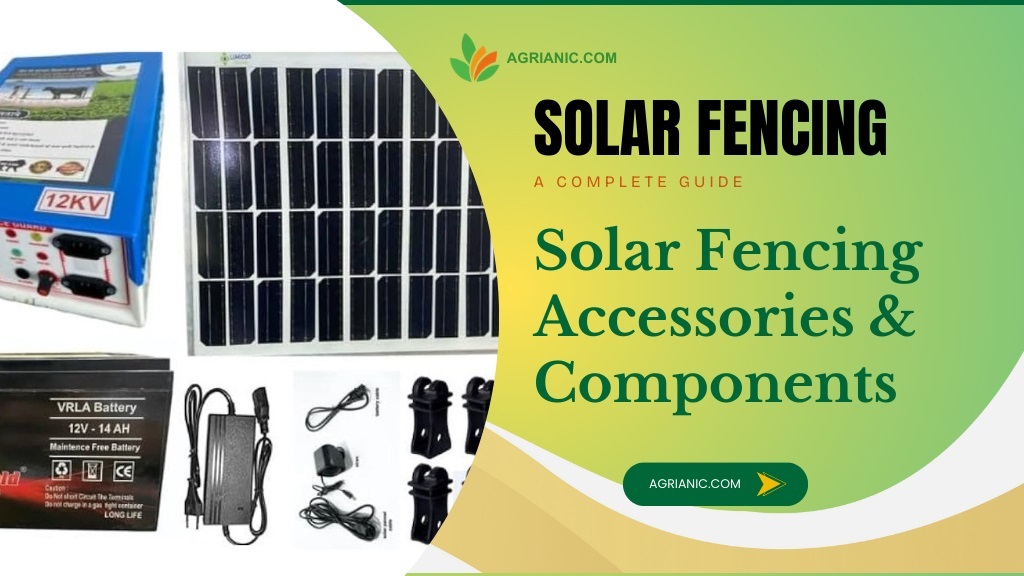
Solar fencing systems are only as strong as their components. Many farmers buy a low-quality energizer or cheap wires and face failures within months. To make the right investment, you should know each part of the system – from solar panels to insulators – and how to choose the right quality for your farm or business.
In this guide, we’ll cover the main components of solar fencing, optional accessories, cost ranges in India (2025), and trusted suppliers.
Key Components of a Solar Fencing System
1. Solar Panels
Solar panels capture sunlight and generate power. Typical sizes for fencing systems range from 40W to 100W, depending on fence length and battery capacity. Choose panels with corrosion-resistant frames and a warranty of at least 10 years.
2. Energizer Unit (Controller)
The energizer is the heart of the solar fencing system. It converts DC power into short high-voltage pulses (typically 4,000–9,000 volts, depending on the system). Energizer size (output power & joule rating) should be chosen based on land size and the target animals.
Tip: An undersized energizer will give weak shocks; an oversized energizer is unnecessary and more expensive.
3. Battery
Batteries store energy for nighttime and cloudy days. Common options:
- Lead-acid: Lower cost, requires topping up (maintenance).
- Lithium-ion: Higher upfront cost, longer life, less maintenance.
Typical spec for farms: 12V, 80–150Ah. Keep batteries in a dry, ventilated, covered location.
4. Fencing Wires
Wires carry the pulses along the fence. Common types:
- GI (Galvanized Iron) wire
- High-tensile (HT) wire
- Stainless steel/mesh for poultry or orchard protection
Use rust-resistant wire for longer life – for areas with large animals (elephants, boars), prefer high-tensile wires.
5. Fence Posts / Poles
Posts support the wires. Options include RCC (concrete) poles, steel poles, or treated wooden poles. Typical spacing is 3–5 metres (10–15 feet), depending on soil and tension.
6. Insulators
Insulators prevent current leakage to the post/ground. Good insulators are usually made from high-quality polyethylene or porcelain. Place an insulator at each wire attachment point.
7. Earthing Rods
Earthing (grounding) is crucial for performance. Use at least 2–3 GI rods (6–8 feet each) driven into moist soil and connected to the energizer earth terminal. Poor earthing = weak shocks.
8. Warning Boards & Signage
Visible warning signs (“⚡ Danger: Electric Fence”) are legally recommended and inform passersby. Place signs at regular intervals and near gates/entrances.
Optional Accessories
- Fence Tester – A Handheld device to measure voltage at different points.
- Lightning Protector – Protects energizer and panels during storms.
- Remote Monitoring / IoT – SMS or app alerts for large farms when voltage drops or the fence is cut.
- Alarm Systems – Local siren or mobile alert when the fence is tampered.
Estimated Cost of Each Component (India, 2025)
| Component | Approx. Price Range (₹) |
|---|---|
| Solar Panel (40–100W) | 2,000 – 6,000 |
| Energizer Unit | 8,000 – 25,000 |
| Battery (12V, 100Ah) | 6,000 – 15,000 |
| GI / HT Wire (per meter) | 8 – 20 |
| RCC / Steel Pole (per unit) | 150 – 500 |
| Insulator (per piece) | 10 – 25 |
| Earthing Rods (per rod) | 500 – 1,500 |
| Warning Board | 50 – 150 |
Note: Prices vary by brand, region, and buying volume. For full project pricing per acre, see our cost guide: Solar Fencing Cost in India (2025).
Top Indian Suppliers for Solar Fencing Components
Some suppliers/brands to consider (India-focused):
- PowerGrid / PowerGrid Solutions – Affordable kits and accessories.
- Kavach Solar Fencing – Regional presence in Maharashtra & Karnataka.
- Solar Secure India – Kits and dealer network in South India.
- AgriPro – Custom agricultural fencing solutions.
- Local approved manufacturers – Many state-approved vendors exist for subsidy eligibility.
See the full supplier list and brand comparison in our brands guide: Top Solar Fencing Brands & Suppliers in India.
Buying Guide: How to Choose the Right Quality
- Start with the energizer: Never compromise on energizer quality – it determines fence effectiveness.
- Match system to land size: Ask suppliers for recommended energizer joules and battery capacity for your acreage.
- Prefer branded batteries or good-quality lithium options: They last longer and reduce maintenance.
- Choose high-tensile or GI wire for durability: Avoid very thin, uncoated wires that rust quickly.
- Check warranty: Energizer (1–2 years), solar panels (5–10+ years). Get written warranty details.
- Buy from subsidy-approved suppliers if you plan to apply for government aid: see our subsidy guide Solar Fencing Subsidy in India (2025).
Component Choice Examples (by Use Case)
Small Farm / 1 Acre (Basic Protection)
- Solar panel: 40–60W
- Energizer: Low-power energizer (suitable for 1 acre)
- Battery: 12V, 80–100Ah lead-acid
- Wire: GI / HT wire
Large Farm / Wild Animal-Prone Area
- Solar panel: 80–100W or multiple panels
- Energizer: Higher joule output energizer (suitable for elephants/large perimeter)
- Battery: 12V, 150Ah or lithium options
- Wire: High-tensile wire, stronger posts, extra earthing
Branded vs Local Solar Fencing Components in India
| Component | Branded (Well-known suppliers) | Local / Unbranded |
|---|---|---|
| Solar Panel | ₹3,500 – ₹6,000 (10+ year warranty, better efficiency) | ₹2,000 – ₹3,000 (shorter lifespan, low warranty) |
| Energizer Unit | ₹10,000 – ₹25,000 (stable output, certified safe) | ₹5,000 – ₹8,000 (inconsistent shocks, less durable) |
| Battery (12V, 100Ah) | ₹8,000 – ₹15,000 (Amaron, Exide; long life, reliable) | ₹5,000 – ₹7,000 (cheaper, but frequent replacements) |
| Fencing Wire | ₹12 – ₹20 per meter (GI/HT, rust-resistant) | ₹6 – ₹10 per meter (rusts quickly, weaker strength) |
| Insulators | ₹15 – ₹25 per piece (UV-resistant, durable) | ₹5 – ₹10 per piece (breaks in the sun/heat easily) |
| Earthing Rod | ₹1,000 – ₹1,500 (tested, lasts longer) | ₹500 – ₹800 (low-quality GI, corrodes quickly) |
Summary: Branded components cost more initially but last longer and ensure reliable performance. Local parts are cheaper upfront but often need replacement within 1–2 years, leading to higher long-term costs.
Additional Resources
Conclusion
Investing in quality components ensures your solar fencing system performs reliably for years and reduces long-term costs. Prioritize a good energizer, proper earthing, a reliable battery, and rust-resistant wire. When in doubt, ask suppliers for references of past installations and always compare 2–3 quotes before buying.
Get Prices from Verified Solar Fencing Systems Sellers Near You
We connect you with trusted and verified sellers near you. Get the best deals, fast and hassle-free!
Popular Products from Verified Sellers
Read Other Posts on Solar Fencing Systems
Solar Fencing System in India: A Complete Guide
Solar Fencing Cost Per Acre in India

Solar Fencing Subsidy in India a Farmer Guide

Top Solar Fencing Brands & Suppliers in India (2025)

Solar Fencing Installation A Complete Step-by-Step Guide

Solar Fencing Maintenance in India: Common Problems & Easy Fixes (2025)

Solar Fencing for Crop Protection in India: How It Helps Against Wild Animals
Is Solar Fencing Legal in India? Rules, Guidelines & Safety Standards

Solar Fencing for Elephant & Wild Animal Protection in India

Solar Fencing vs Traditional Fencing in India: Which is Better